


Ask most casino players how they’ve gone over the past few sessions, and the answer will often include a win. It might not have been recent, large, or even profitable overall — but it will be there. A bonus that landed unexpectedly. A decent hit that felt good at the time. A moment worth mentioning. Losses, meanwhile, tend to be summarised vaguely, if they’re mentioned at all.
This isn’t dishonesty. It’s memory at work.
Gambling experiences are not remembered as spreadsheets or balance histories. They’re remembered as moments, emotions, and stories. The brain doesn’t store every spin equally; it filters aggressively, keeping what feels meaningful and discarding what doesn’t. In that process, wins are far more likely to survive than losses.
Wins stand out because they break expectations. They interrupt losing runs, deliver relief, and produce emotional spikes. Losses, by contrast, are repetitive and unsurprising. One losing spin feels much like the last, and the brain quickly learns not to waste storage space on things that feel routine.
Over time, this selective recall reshapes how players understand their own history. Sessions that were objectively negative can be remembered as “not too bad.” Long losing periods shrink into background noise, while a single good moment expands to represent the experience as a whole. The memory feels accurate because the remembered pieces are real — what’s missing is everything in between.
This bias has consequences. It affects how players judge games at online casinos, evaluate strategies, and decide whether they’re doing “well” overall. It also feeds many of the myths and beliefs that surround gambling, from perceived hot streaks to confidence in personal judgement.
This article explores why players remember wins more than losses, how emotion and repetition shape gambling memory, and why the gap between remembered experience and actual results can grow wider over time. The goal isn’t to strip away enjoyment, but to understand how memory quietly edits reality — often without us noticing.
How Memory Actually Works With Emotion
Memory isn’t a neutral recording system. It’s selective, compressive, and heavily influenced by emotion. The brain prioritises experiences that feel significant and discards those that feel repetitive or low-value. In gambling, this filtering process has a clear bias: emotionally charged moments survive, while emotionally flat ones fade.
Wins generate emotion. Even modest wins interrupt a losing rhythm and trigger relief, excitement, or satisfaction. They feel like events. Losses, on the other hand, are often uniform. One losing spin blends into the next, creating a steady background of disappointment that quickly loses definition. When experiences lack contrast, the brain treats them as redundant.
Emotion acts like a highlighter. Moments that provoke a strong response — positive or negative — are tagged as important. In gambling, wins tend to produce sharper emotional peaks than losses produce troughs. A loss feels bad, but it often feels expected. A win feels unexpected, and that surprise makes it stick.
Several emotional mechanisms quietly influence what gets remembered:
- Surprise increases memorability
- Relief reinforces positive recall
- Repetition reduces distinctiveness
- Familiar disappointment fades quickly
These mechanisms operate automatically. Players don’t choose to remember wins more clearly; their brains simply allocate memory space based on emotional signal strength.
This process also explains why losses can feel heavier in the moment but lighter in hindsight. During play, a losing run may feel frustrating or draining. Once the session ends, however, those losses lack defining features. They collapse into a general sense of “it didn’t go great,” while specific winning moments remain intact and vivid.
Over time, this creates an imbalance between lived experience and remembered experience. The player genuinely experienced many losses, but the memory system retained only a handful of standout moments — usually wins or near-wins. When asked to recall how things went, the brain retrieves what it stored, not what actually happened in aggregate.
Understanding this doesn’t require players to distrust their own memory. It simply means recognising that gambling outcomes are emotionally uneven, and memory reflects that unevenness. Wins survive because they feel like moments. Losses fade because they feel like background.
This emotional filtering sets the stage for many of the beliefs players form later — about luck, streaks, and personal performance. When memory is skewed toward wins, conclusions drawn from that memory will be skewed as well.
The Role of Loss Aversion
Loss aversion shapes how gambling is felt in the moment and how it’s remembered afterward. People tend to experience losses more intensely than equivalent gains, yet paradoxically, those losses don’t always survive long in memory. This imbalance plays a central role in why wins dominate recall.
During play, losses register immediately. A losing spin produces a small emotional sting, which accumulates as sessions continue. That sting is what makes real-money gambling feel tense and demanding. Wins, by contrast, arrive less frequently but carry a sharper emotional peak. They interrupt the negative flow and offer relief.
What happens after the session is where memory begins to diverge from experience. Losses that were painful in real time lose definition once they’re over. Wins, however, retain their shape. They are remembered as discrete moments with clear emotional boundaries.
This asymmetry creates a strange effect: losses feel worse while they’re happening, but wins feel stronger when remembered.
| During play | In memory |
| Losses dominate emotionally | Wins dominate recall |
| Wins feel like relief | Wins feel like highlights |
| Losses feel repetitive | Losses blur together |
| Tension accumulates | Tension fades |
Loss aversion also influences how players interpret outcomes. A win doesn’t just feel good; it feels corrective. It repairs the emotional damage caused by prior losses, which gives it extra weight in hindsight. The memory isn’t just of the win itself, but of what it resolved.
This helps explain why players can remember sessions that were net losses as “not that bad.” The memory system doesn’t average outcomes. It preserves emotional turning points. If a win arrived late in the session or broke a long losing run, it can dominate the recollection, even if it didn’t meaningfully change the balance.
Loss aversion doesn’t make players forget losses entirely. It changes their shape. Losses lose their edges once the immediate emotional response fades. Wins retain theirs because they provided relief at a moment when it was needed.
The result is a memory profile that exaggerates success and compresses failure — not because players are avoiding the truth, but because their brains are optimised to remember what mattered emotionally, not what mattered mathematically.
Wins as “Highlight Moments”
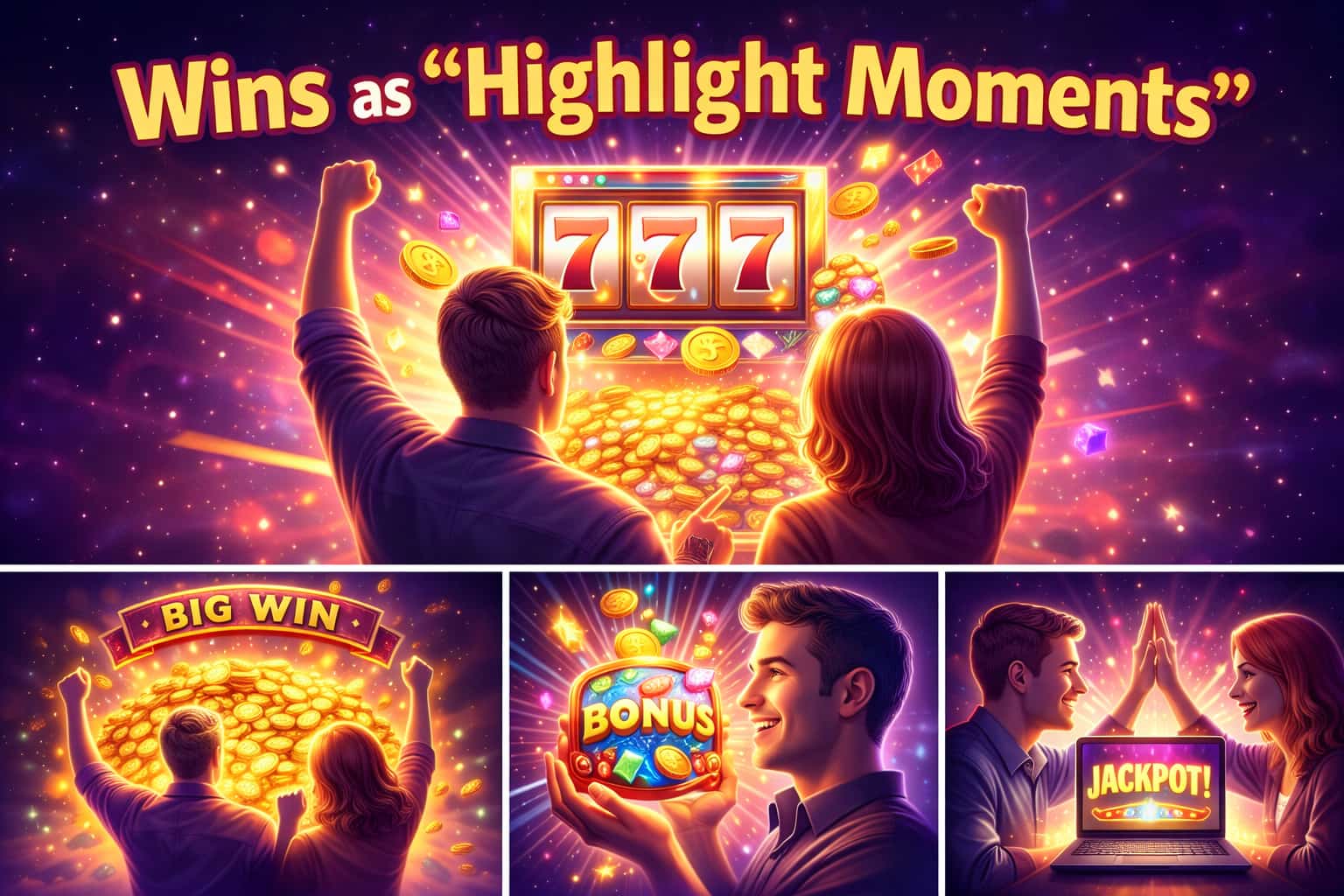
Wins don’t just feel good in the moment — they become anchors in memory. They’re the moments players replay, reference, and build stories around. In the context of gambling, a win isn’t just an outcome; it’s an event.
What separates wins from losses in memory is structure. A win has a clear beginning, middle, and end. There’s anticipation as the reels spin, recognition as symbols line up, and release when the payout lands. That arc makes the moment self-contained and memorable.
Losses rarely have that shape. A losing spin resolves instantly and then disappears into the next one. There’s no narrative, no payoff, and no clear boundary marking it as distinct from the dozens that came before. Over time, these losses merge into a single impression rather than a series of events.
This is why players often remember when they won, but not how often they lost.
A bonus round that landed on a quiet afternoon, a feature that retriggered unexpectedly, or a win that came just before logging off — these moments stand out because they broke the flow of play. They become reference points the brain can easily retrieve later.
Wins also benefit from repetition through retelling. Players talk about them. They describe them to friends, recall them internally, or measure future sessions against them. Each retelling reinforces the memory, strengthening its emotional weight and clarity.
Losses don’t get the same treatment. There’s little reason to recount a stretch of losing spins, and even less reward in doing so. Without reinforcement, those memories fade quickly.
Over time, this creates a mental highlight reel. The player’s remembered history becomes a collection of peaks rather than a full recording. When they think back on how they’ve done overall, it’s these peaks that surface first.
This doesn’t mean players are ignoring losses. It means wins are designed by nature to be remembered more easily. They interrupt monotony, carry emotional resolution, and lend themselves to storytelling. Losses do none of these things.
When people say they remember wins more than losses, they’re describing a perfectly normal memory process. Gambling simply exaggerates it by producing many forgettable moments and a few highly memorable ones — and memory naturally clings to the latter.
Why Small Losses Blend Together
Most gambling losses aren’t dramatic. They’re small, frequent, and repetitive. A spin misses. Another does the same. Nothing visually striking happens, and nothing emotionally distinct separates one loss from the next. From the brain’s perspective, these moments are low-information.
Memory is economical. It doesn’t store everything — it stores what feels useful. When experiences repeat without variation, the brain compresses them. Ten similar losses don’t get recorded as ten separate events; they’re bundled into a general sense of “losing for a bit.”
This compression is especially strong in gambling because losses often lack contrast. The animation is brief, the outcome is expected, and attention moves on instantly. Without surprise or novelty, there’s nothing for memory to latch onto.
Over the course of a session, this creates an imbalance. Losses take up far more time than wins, but far less space in memory. Wins, by contrast, interrupt the pattern. They introduce colour, sound, and emotional release. Even small wins are distinct simply because they are different.
This is why players can honestly say they “lost a bit here and there” while vividly recalling a single decent win. The losses were real, but they were mentally filed as background rather than foreground.
There’s also a protective element to this blending. Constantly replaying small losses would be emotionally exhausting. The brain smooths them out as a way of maintaining equilibrium. What’s lost in accuracy is gained in emotional efficiency.
The downside is that this compression distorts self-assessment. When losses blur together, it becomes harder to judge how much time or money was actually spent. The remembered experience feels lighter than the lived one, even though nothing has been hidden or denied.
Small losses blend together because they don’t demand attention individually. They lack the structure, emotion, and novelty required to stand out. Over time, they fade into a single impression — while wins remain sharply defined.
This quiet imbalance sets the stage for many later beliefs about performance and luck. When losses shrink in memory and wins remain vivid, it’s easy to feel that things are going better than they actually are.
Session End Bias
How a gambling session ends has a disproportionate influence on how it’s remembered. Psychologists call this session end bias: the tendency to judge an experience largely by its final moments rather than by everything that came before.
In gambling, this bias is especially powerful because sessions don’t end at neutral points. They often end after a win, a bonus trigger, or a decision to stop “on a high.” Loss-heavy endings are more likely to be avoided, extended, or reframed.
A session that included long stretches of losses can still be remembered positively if it finished with something emotionally satisfying. The ending acts as a summary, compressing the entire experience into a single feeling.
Several common behaviours reinforce this bias:
- Players stop shortly after a win or feature
- Sessions continue through losses until something “happens”
- Endings are chosen deliberately, not randomly
- The final outcome becomes the reference point for recall
This means that memory isn’t averaging outcomes — it’s weighting endings.
The effect becomes clearer when comparing how sessions are evaluated.
| What happened during the session | How it’s often remembered |
| Long losing stretches, small win at the end | “Not too bad overall” |
| Several wins early, heavy losses at the end | “That session was rough” |
| Break-even play, strong final bonus | “I did alright” |
| Moderate losses, no final highlight | “Just one of those days” |
The ending doesn’t just influence memory — it influences narrative. When players describe a session, they often start with how it finished. That framing then colours everything else they recall.
This bias also explains why wins feel so dominant in hindsight. A single positive event near the end of play can outweigh dozens of forgettable losses that came earlier. The memory feels honest because the win was real — it just wasn’t representative.
Session end bias doesn’t require exaggeration or selective honesty. It’s a shortcut the brain uses to evaluate experiences efficiently. Gambling, with its uneven emotional spikes, makes that shortcut particularly misleading.
When players remember wins more than losses, they’re often remembering how sessions ended, not how they unfolded.
Storytelling and Retelling Effects
Memory doesn’t just store experiences — it reshapes them every time they’re told. In gambling, this retelling process plays a major role in why wins grow larger and losses shrink over time.
When players talk about gambling, they rarely recount sessions spin by spin. They tell stories. Stories need focus, contrast, and resolution. Wins naturally fill that role. They provide a clear point, a satisfying ending, and something worth sharing. Losses, especially small or repetitive ones, don’t translate well into narrative.
A typical retelling might centre on:
- a bonus that landed unexpectedly
- a win that arrived just before stopping
- a moment where things “turned around”
Everything else becomes context or disappears entirely.
What’s important is that retelling isn’t just communication — it’s reinforcement. Each time a win is described, the memory is replayed, strengthened, and simplified. Details that don’t serve the story drop away. The win becomes cleaner, more central, and more representative of the experience than it ever was in real time.
Losses don’t benefit from this process. They’re rarely retold, and when they are, they’re summarised vaguely: “I gave a bit back”, “It didn’t go great after that”, “I ended up down.” Without repetition, those memories weaken quickly.
Over time, this creates a feedback loop. Wins are remembered because they’re told. They’re told because they’re remembered clearly. Losses fade because they aren’t revisited in the same way.
This also affects how players interpret their own history. When someone thinks back over weeks or months of play, what surfaces first are the moments that have been rehearsed through storytelling. The brain doesn’t retrieve raw data — it retrieves the polished versions.
Importantly, this doesn’t require exaggeration. Players don’t need to inflate wins or deny losses. The distortion happens through selection, not fabrication. The story becomes the memory, and the memory becomes the evidence.
Storytelling gives wins a second life and losses an early exit. In gambling, where results are uneven and emotionally charged, that imbalance compounds quickly. What’s remembered starts to look far better than what was actually experienced.
Confirmation Bias in Gambling Memory
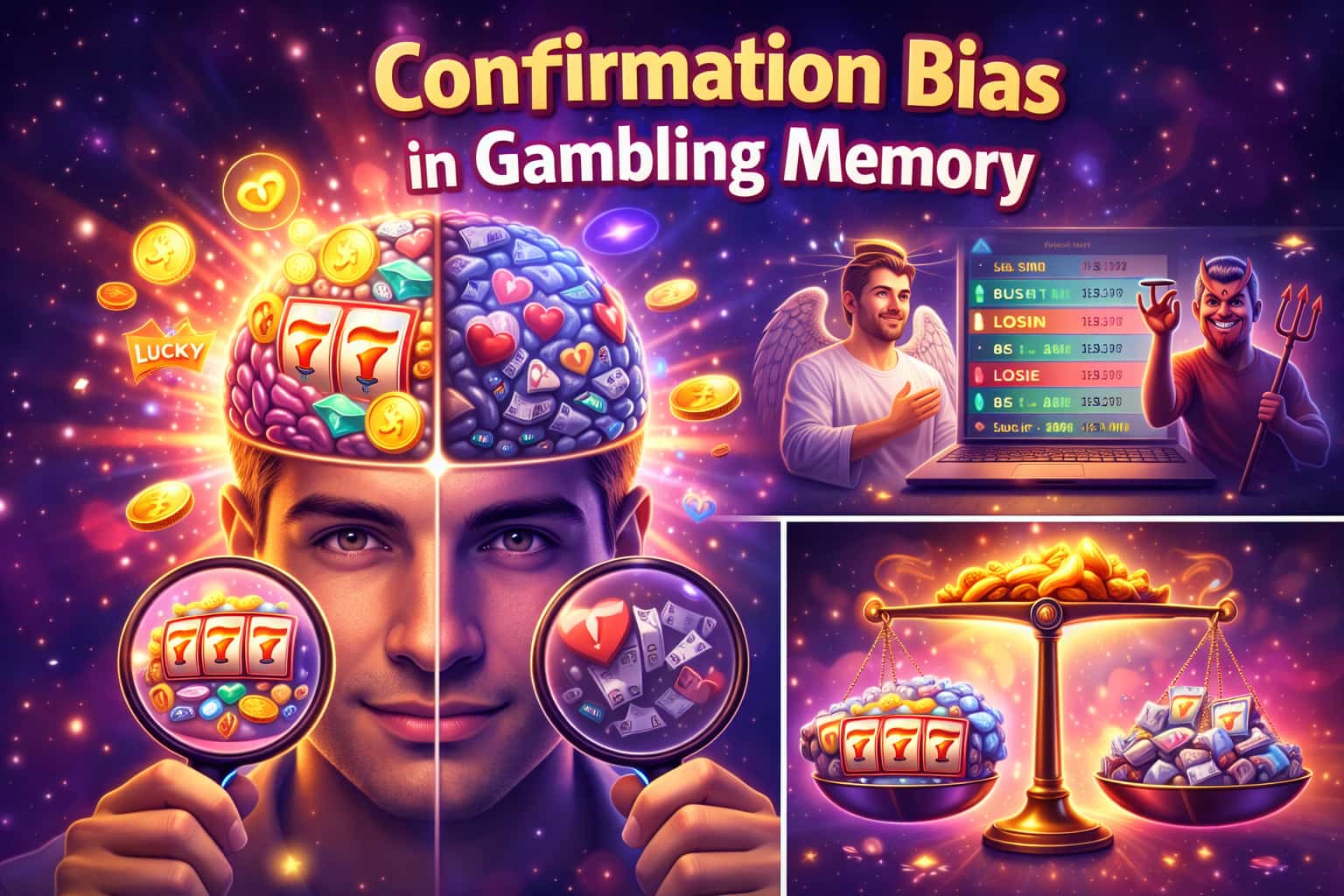
Once players begin to form beliefs about their gambling — that they’re generally lucky, that certain games suit them, or that they tend to “do alright” — memory starts working in service of those beliefs. This is confirmation bias at work: the tendency to notice, remember, and prioritise information that supports what we already think is true.
In gambling, confirmation bias doesn’t usually announce itself. It operates quietly, filtering which memories feel relevant and which fade into the background. Wins that align with a player’s self-image are remembered more vividly. Losses that contradict it are softened, reinterpreted, or forgotten more quickly.
For example, a player who believes they’re good at picking games will remember the times a chosen pokie paid well. The many sessions where nothing happened won’t feel as diagnostic. They’re treated as noise rather than evidence.
This selective recall reinforces belief over time. Each remembered win becomes proof. Each forgotten loss removes a potential challenge.
The pattern tends to look like this:
| Belief | What memory highlights | What memory downplays |
| “I’m usually lucky” | Unexpected wins | Routine losses |
| “I know when to stop” | Leaving after a win | Sessions that ended badly |
| “This game suits me” | Bonuses on that title | Long dry spells on the same game |
| “I do okay overall” | Memorable positives | Net results |
What makes confirmation bias especially powerful is that it feels rational. Players aren’t inventing outcomes — they’re drawing conclusions from real experiences. The issue is that those experiences represent a filtered sample, not the full picture.
Over time, this bias stabilises belief. Players don’t feel uncertain about how they’re doing because memory provides consistent reinforcement. Wins feel frequent enough, losses feel manageable enough, and the overall narrative remains intact.
Confirmation bias also explains why objective records can feel jarring. When players look at session histories or balances over time, the data may clash with memory. The reaction isn’t usually denial — it’s surprise. The remembered experience felt better than the numbers suggest.
This isn’t a flaw unique to gambling. It’s how humans make sense of complex, uncertain environments. Gambling simply provides a steady stream of ambiguous outcomes that bias can quietly organise into a coherent — if inaccurate — story.
When wins are remembered more clearly than losses, confirmation bias ensures that those memories don’t just sit there. They actively shape belief, confidence, and future decisions.
Why This Bias Feels Rational
What makes selective memory so convincing is that it doesn’t feel like bias while it’s happening. From the player’s point of view, the conclusions drawn from remembered wins and blurred losses feel reasonable, even evidence-based. After all, the wins being recalled really did happen.
The issue isn’t fabrication — it’s incomplete sampling.
Players aren’t consciously ignoring losses. Those losses simply don’t surface with the same clarity. When the brain reaches for examples to answer the question “How have I been doing?”, it retrieves what’s most available. In gambling, that tends to be moments of relief, surprise, and satisfaction.
This process feels rational because it mirrors how learning works elsewhere. In many activities, memorable successes genuinely indicate improvement. If a golfer remembers more good shots over time, or a musician recalls fewer mistakes, that often reflects real progress. Gambling borrows that logic even though the environment doesn’t support it.
Another reason the bias feels justified is that remembered wins often coincide with decision points. A player may recall changing games before a win, increasing a stake, or choosing to continue at the “right” moment. Because these decisions preceded positive outcomes, they feel validated in hindsight. The memory links action to result, even when the relationship was coincidental.
There’s also an emotional coherence to remembered wins. They fit neatly into a story where effort, patience, or instinct pays off. Losses, by contrast, feel random and uninformative. The brain prefers explanations that preserve meaning, and wins offer that far more readily than losses do.
Importantly, nothing about this process feels deceptive from the inside. The memory is vivid. The emotion was real. The conclusion feels earned. From the player’s perspective, it would be stranger not to trust those memories.
This is why simply knowing about memory bias doesn’t dissolve it. A player can fully understand that outcomes are random and still feel that certain sessions “went well” based on what stands out afterward. Rational understanding and emotional recall operate on different tracks.
Selective memory feels rational because it uses real events to build a coherent picture. What’s missing isn’t truth — it’s proportion. Without access to the full distribution of outcomes, memory fills the gaps in ways that feel sensible, reassuring, and consistent.
That’s why this bias is so persistent. It doesn’t rely on fantasy. It relies on memory doing exactly what it’s designed to do — highlight what mattered emotionally and quietly discard the rest.
The Gap Between Remembered and Actual Results
Over time, the difference between what players remember and what actually happened can grow surprisingly wide. This gap isn’t the result of exaggeration or self-deception — it’s the cumulative effect of emotional filtering, repetition, and selective recall.
When players think back on their gambling, they don’t retrieve totals or timelines. They retrieve impressions. Those impressions are built from a handful of standout moments — usually wins — layered over a general sense of how things felt. The more uneven the experience, the wider the gap becomes.
Actual results, by contrast, are flat and unromantic. They’re defined by accumulation: dozens or hundreds of small outcomes adding up over time. This is precisely the kind of information memory is bad at preserving.
The contrast looks something like this:
| Remembered experience | Actual session reality |
| A few strong wins stand out | Many small losses occurred |
| Sessions feel mixed or “okay” | Net result is often negative |
| Wins feel frequent | Wins were sparse but vivid |
| Losses feel incidental | Losses dominated time spent |
What makes this gap hard to notice is that remembered experience still feels truthful. The wins were real. The enjoyment was real. The frustration during losses may have been real too — it just didn’t survive intact once the session ended.
This divergence has practical consequences. Players may feel they’re close to breaking even when they’re not. They may believe certain games suit them better based on remembered highlights rather than sustained outcomes. They may underestimate how much time or money has actually been spent because losses blended together in memory.
The gap also widens as sessions accumulate. Over weeks or months, remembered wins from different sessions stack neatly, while losses remain vague and unanchored. The mind builds a highlight reel across time, not a balanced ledger.
When players finally encounter objective records — balances, statements, or long-term summaries — the mismatch can be surprising. It’s not uncommon for people to feel genuinely confused by figures that don’t match their internal narrative. The memory felt honest; the numbers feel foreign.
Understanding this gap isn’t about distrusting enjoyment or dismissing remembered wins. It’s about recognising that memory is not designed to track cumulative risk. It’s designed to preserve moments that felt meaningful. Gambling exploits that mismatch by producing many forgettable outcomes and a few unforgettable ones.
The remembered experience feels better than the actual results because memory isn’t measuring performance. It’s preserving emotion. And over time, that difference adds up.
Recognising Memory Bias And Still Having Fun
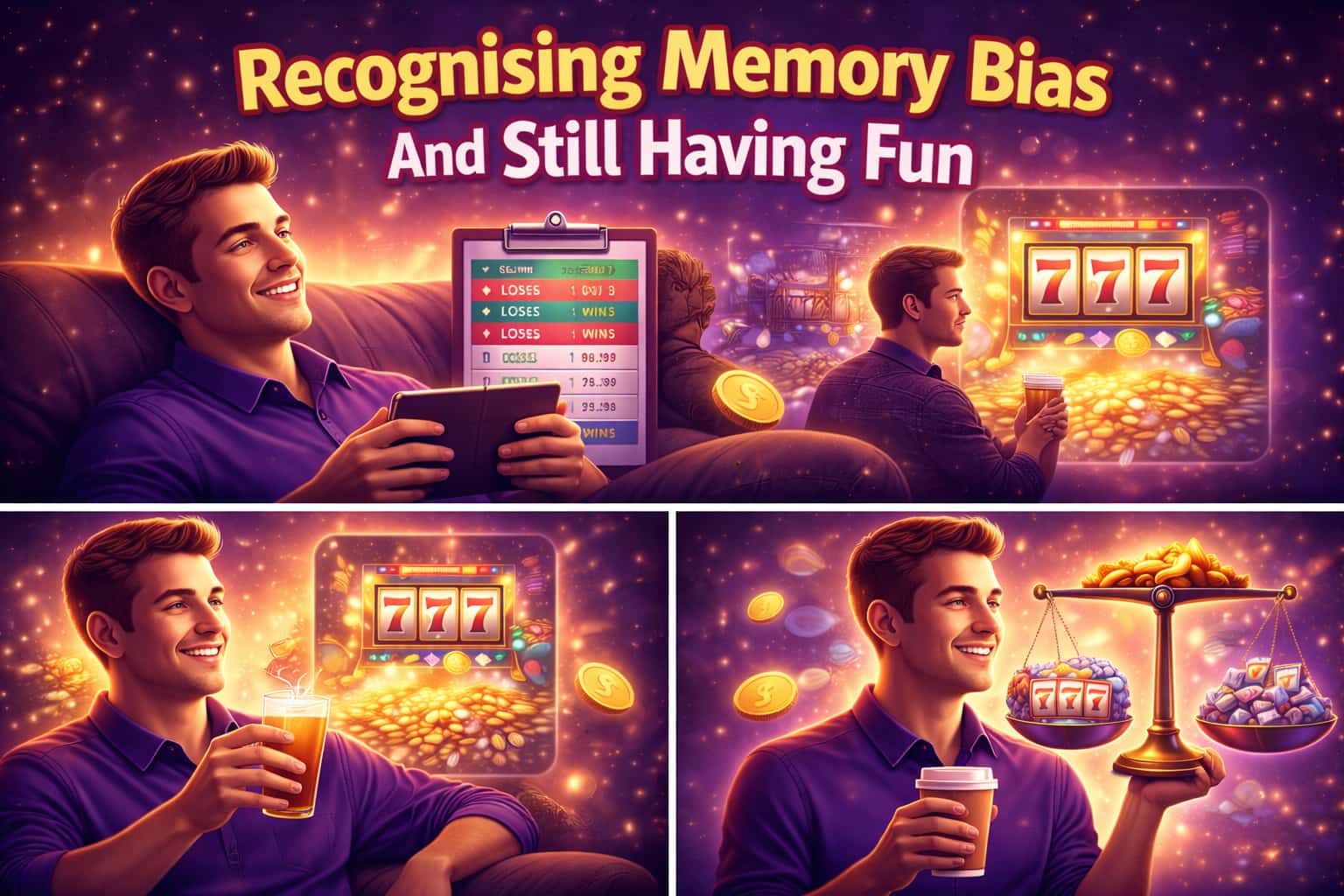
Recognising that wins are remembered more clearly than losses doesn’t mean those wins stop mattering. Enjoyment doesn’t become invalid just because memory is selective. What changes is how much weight those memories are asked to carry.
Many players worry that understanding bias will drain the fun from gambling, turning it into something overly analytical or joyless. In practice, the opposite often happens. When players stop using memory as proof of performance, sessions feel less evaluative and more honest. Wins can be enjoyed without needing to justify past losses. Losses can pass without needing to be explained away.
Awareness shifts the role memory plays. Instead of acting as evidence — I’m doing well, this game suits me, I usually get something back — memory becomes what it actually is: a highlight reel. It captures moments that felt good, not a balanced account of outcomes.
This distinction matters because much of the frustration in gambling comes from expectation gaps. Players expect results to line up with remembered experiences. When they don’t, disappointment follows. Recognising memory bias helps narrow that gap. The remembered win is no longer a benchmark future play needs to live up to.
Importantly, this awareness doesn’t require constant self-monitoring or emotional detachment. It’s enough to know that what stands out later isn’t a reliable summary of what happened overall. That knowledge can sit quietly in the background, without interfering with enjoyment in the moment.
Gambling will always produce memorable moments. That’s part of its appeal. The issue arises only when those moments are mistaken for patterns, performance, or progress. Separating memory from measurement allows each to do its own job.
Wins can still feel good. Losses can still sting less over time. Enjoyment doesn’t disappear. What fades is the quiet confusion about how things are actually going.
Recognising memory bias doesn’t take anything away from the experience. It simply restores proportion — letting remembered wins remain what they are, without asking them to represent the whole story.
Frequently Asked Questions
Why do players remember wins more than losses?
Because wins create stronger emotional moments. They interrupt losing patterns, generate relief or excitement, and are more likely to be stored as distinct memories. Losses are repetitive and blend together, making them easier to forget over time.
Is this memory bias intentional or dishonest?
No. Players aren’t deliberately ignoring losses. Memory naturally prioritises emotionally significant events and compresses repetitive experiences. The bias happens automatically, without conscious choice.
Do losses feel worse in the moment but fade later?
Yes. Losses often feel emotionally heavier during play, but once the session ends, they lose definition. Wins tend to retain their emotional shape, which is why they dominate recall afterward.
Why does a single win outweigh many losses in memory?
Because memory doesn’t average outcomes. It preserves standout moments. A win that felt relieving or exciting can outweigh dozens of small losses that lacked emotional contrast.
How does session end bias affect gambling memory?
Sessions are often remembered based on how they ended. Finishing after a win can make an overall losing session feel positive, while ending after losses can overshadow earlier wins.